Comparison
Container Conversion vs Flatpack: Which Fits Your Site
ISO container conversion or flatpack assembly? Cost, lead time, structural performance and customisation compared for site managers, developers and contractors choosing between two modular routes.
When a brief lands for a “modular building” — site office, secure storage, welfare unit, pop-up retail — the first decision is almost always between two delivery formats: an ISO shipping container conversion, or a flatpack-assembled cabin. Both ship to site in a single delivery, both arrive insulated and weather-tight, both bolt to a prepared base. From there, the differences matter — and they matter early, because they shape lead time, cost, structural performance and customisation in different directions.
This guide is the same framework our specification team uses when a brief is genuinely ambiguous between the two formats.
Lead time and assembly speed
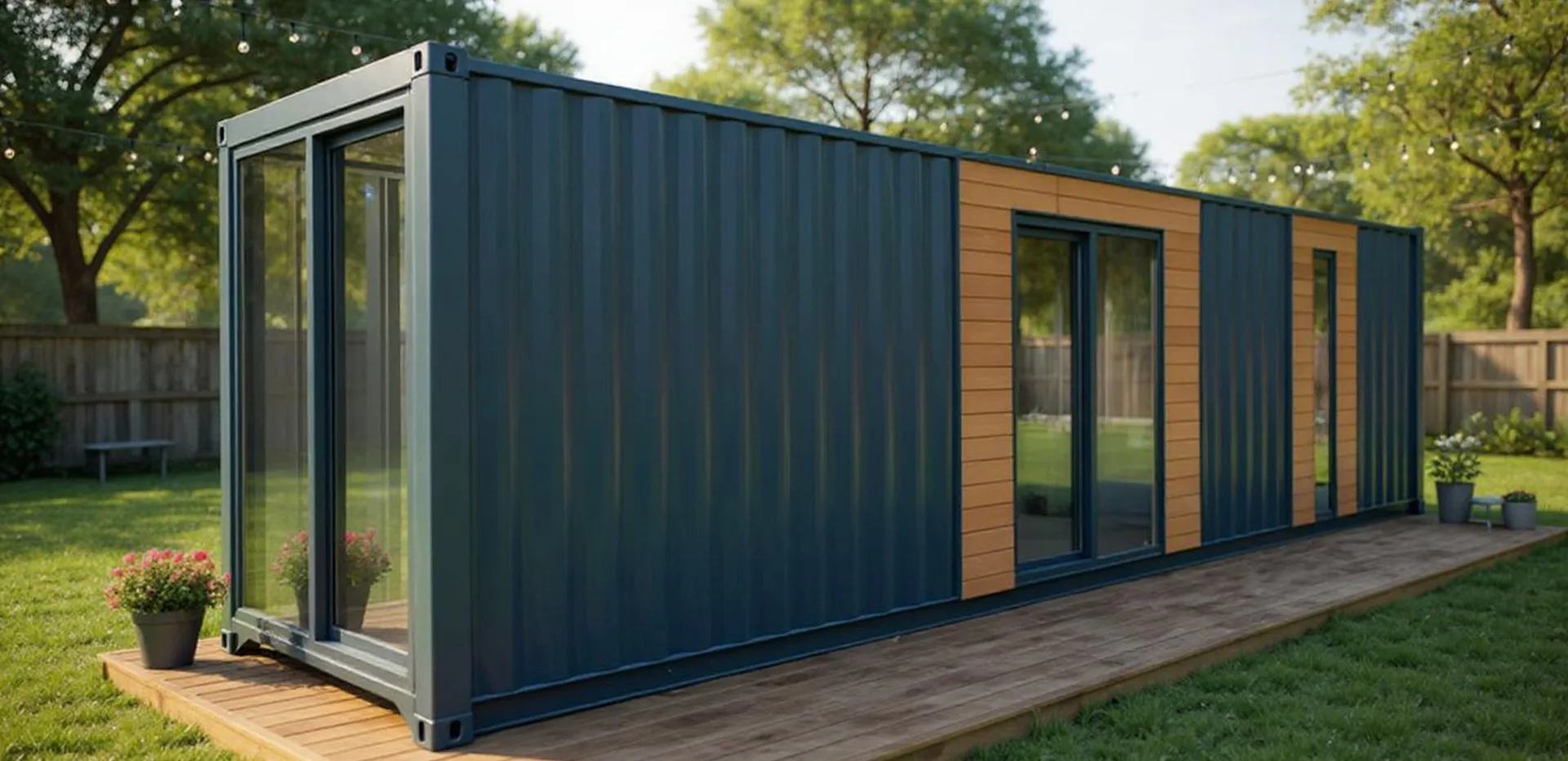
A container conversion starts life as a 20FT or 40FT ISO chassis — a unit that already has a galvanised steel frame, weather-resistant corrugated walls, and standardised mounting points. The conversion process adds insulation, interior linings, glazing, doors, electrical and plumbing inside that envelope. Lead time on a standard MODDOLIVING container conversion is 8–12 weeks from signed order.
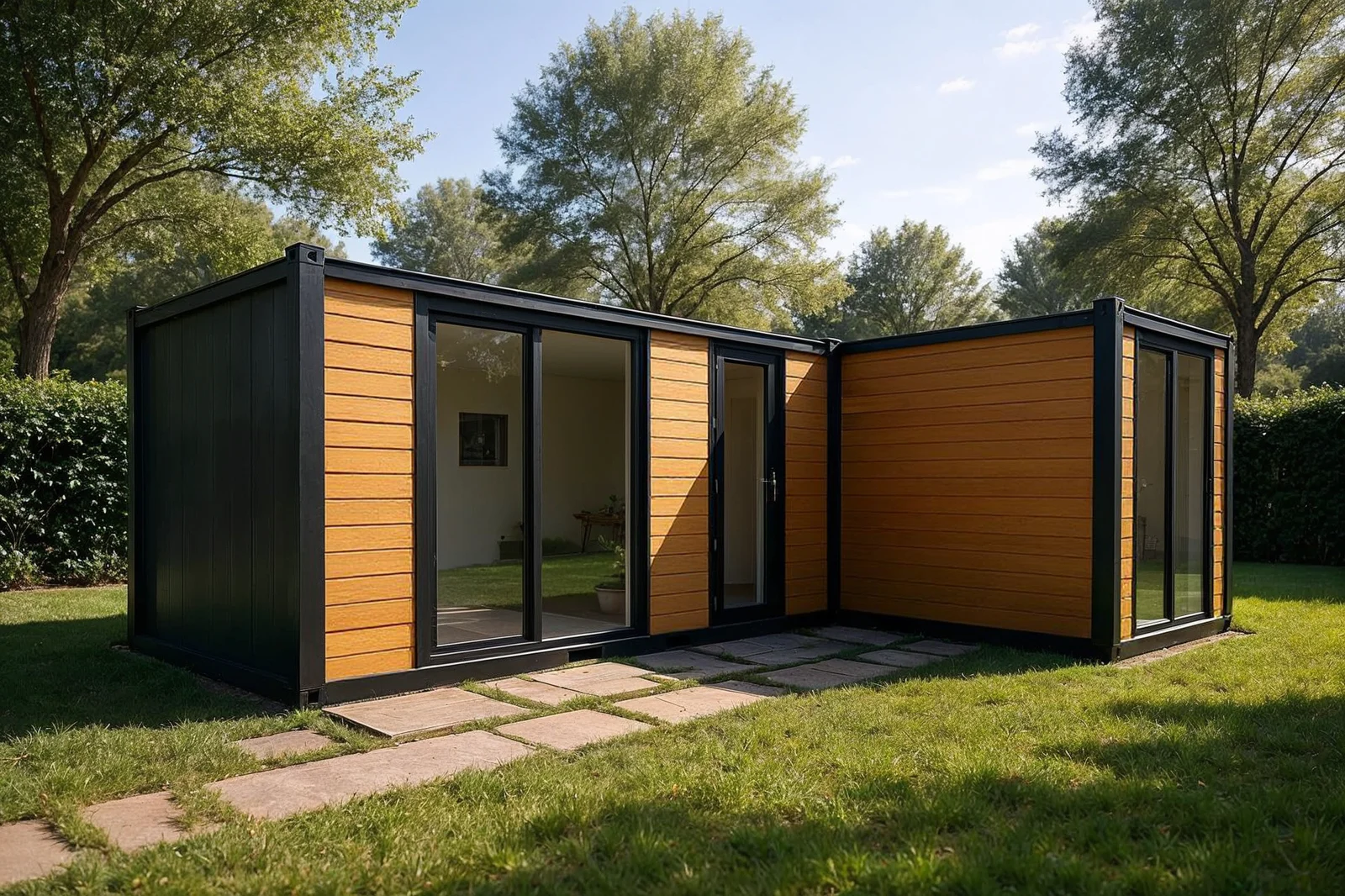
A flatpack container ships as panels: a chassis, four wall panels, a roof, glazing units and fixings, transported flat on a single trailer or stacked across two. Assembly on site takes 4–8 hours with two operators and no heavy plant — no crane required for placement, only for offload. Lead time on a standard MODDOLIVING flatpack is 6–8 weeks.
If the project is time-critical, flatpack wins on lead time and tight-access site delivery. If the project needs a single drop-and-go on a prepared base, container conversion wins on installation speed.
Cost framework
Per square metre, the two formats price close to each other for an unfitted shell — the chassis costs balance out against the assembly labour. Where they diverge is in fit-out density.
A container conversion handles a high-density fit-out well — large kitchen, full bathroom, multiple electrical circuits, integrated HVAC. Heavy MEP is bolted to a single steel envelope that doesn’t move.
A flatpack handles a light to medium fit-out efficiently — site office, secure storage, basic welfare, pop-up retail. Adding heavy MEP to a flatpack is possible but begins to erode the cost advantage, because every additional electrical or plumbing run crosses an assembled joint.
The rough rule: light fit-out + tight access + short lead time → flatpack. Heavy fit-out + repeat use + permanent placement → container conversion.
Structural performance
Both formats are engineered to the same building-regulations envelope, but their structural personality differs.
A container conversion is a monocoque steel box, ISO-rated for stacking, designed to survive the open ocean. Once converted, that envelope is among the most durable building shells in the modular industry — it will outlast most permanent buildings of equivalent age on the same site.
A flatpack is a bolted-panel envelope. Engineered for the same wind and snow loads as a fixed building, fully weather-tight, and rated for 10+ years of service across multiple sites. Where flatpack wins structurally is portability: the panels can be disassembled, transported and reassembled on a new site in days, with no specialist plant.
If the unit will sit on a single site permanently, container conversion has a structural edge. If the unit will move between sites every 2–5 years, flatpack is engineered for the relocation.
Customisation ceiling
A container conversion has a higher customisation ceiling. The ISO chassis accepts wider window openings, full-height glazed walls, joined-unit configurations (two 40FT joined into a 64 m² space), and roof-mounted plant. The MEP capacity inside a steel envelope is substantially higher than a panel-built unit.
A flatpack has a lower but faster customisation ceiling. Door and window positions, cladding colour, internal layout from a pre-engineered set, finish package — all handled in the factory at no engineering surcharge. Anything beyond the standard catalogue falls outside the engineered footprints we ship.
The deciding question
When the spec is ambiguous, the question we ask is: how many times will this unit move in the next ten years?
- Zero times (single-site, permanent placement) — container conversion. The structural durability and customisation ceiling pay back over time.
- One or two times (medium-term project, eventual relocation) — either format works; choose on cost and lead time.
- More than two times (touring deployment, repeat-use site welfare, modular fleet) — flatpack. The relocation cost is engineered into the format from the start.
Share your project context with the brief — intended use, site type, expected service life and number of relocations — and we will configure against the right format and respond with an itemised quote within one working day.